
Table Of Contents
Aldrich Ames

In the annals of American espionage, few stories rival the sheer audacity and devastation wrought by Aldrich Hazen Ames.
A career CIA officer who turned traitor for the KGB, Ames did not sell out for ideology or revenge; he did it for cold, hard cash to fund a lifestyle of luxury.
Over nine years, his actions led to the execution of at least ten U.S. intelligence assets, the compromise of over 100 operations, and a staggering blow to CIA morale and capabilities during the twilight of the Cold War.
Now, at 84 years old in 2025, Ames remains incarcerated, a living reminder of the perils of internal betrayal.
This in-depth investigation verifies the facts from reliable sources, corrects common misconceptions (such as his exact prison location), and reveals the human cost of one man’s greed, drawing on declassified reports, firsthand accounts from investigators, and victim testimonies.
Early Life
Aldrich Ames was born on May 26, 1941, in River Falls, Wisconsin, the eldest child and only son of Carleton Cecil Ames, a CIA officer, and Rachel Ames, a high school teacher.
His father’s career in the CIA’s Directorate of Operations exposed young Ames to the world of intelligence from an early age.
The family moved to Langley, Virginia, in 1952, and then to Southeast Asia for three years starting in 1953, where Carleton’s alcoholism began to surface.
Back in the U.S., Ames attended McLean High School and worked summers at the CIA, handling classified documents as a low-level analyst, from 1957.
Ames briefly studied at the University of Chicago but flunked out due to poor grades, distracted by theater.
He returned to D.C., earned a history degree from George Washington University in 1967, and joined the CIA full-time in 1962, initially in menial roles before entering the Career Trainee Program.
Early red flags included alcohol-related incidents, mirroring his father’s issues, but they did not derail his clearance.
By age 21, Ames was already immersed in the secretive culture that would later consume him, a pattern of mediocrity masked by family ties and institutional loyalty.
CIA Career
Ames’ early postings were underwhelming.
In 1969, he married fellow trainee Nancy Segebarth and was sent to Ankara, Turkey, where he struggled to recruit Soviet assets, earning only “satisfactory” reviews.
Superiors noted his unsuitability for fieldwork, including failed attempts to infiltrate Soviet-aligned student groups through beauty pageants and activism.
Back at headquarters in 1972, he handled Soviet operations with improved feedback.
However, procrastination and security lapses, such as leaving a classified briefcase on the New York City Subway in 1976, plagued him.
In Mexico City from 1981, his performance hit rock bottom amid heavy drinking and affairs.
There, he met Rosario Casas Dupuy, a Colombian cultural attaché and CIA informant, whom he married in 1985 after a messy divorce from Nancy that left him with a $46,000 settlement and ongoing alimony.
The couple had a son named Paul in 1989.
By 1983, Ames was in the sensitive Soviet counterintelligence branch, granting him access to America’s most guarded secrets.
Despite red flags, like a drunken argument with a Cuban official in 1982, promotions followed, a testament to the CIA’s “fraternity” culture that later drew congressional ire.
The Turn To Treason
Financial pressures mounted.
Rosario’s extravagant tastes, designer clothes, luxury cars, and high phone bills to Colombia, far outstripped Ames’s $60,000–$ 70,000 annual salary.
Deep in debt from the divorce and loans, Ames walked into the Soviet Embassy in Washington on April 16, 1985, offering minor intel for $50,000.
This “one-time” deal snowballed; he soon provided names of over ten CIA assets inside the KGB, eliminating competition and securing his value to Moscow.
Unlike ideological spies, Ames was motivated purely by greed, no political grudge, just a quick fix for bills.
He met KGB handlers at lunches, passing secrets in plastic bags while receiving $20,000 to $50,000 per session.
Total payments: $2.5–2.7 million received, with a promised $4.6 million, the highest ever to an American traitor.
In a 1994 New York Times interview, Ames later reflected: “I did something still not entirely explicable even to me, without preconditions or any demand for payment, I volunteered to the KGB information identifying virtually all Soviet agents.”
The Betrayals And Damage
Ames’ leaks were catastrophic.
He compromised “virtually all” CIA assets in the Soviet Union, leading to at least ten executions.
Key victims included:
| Code | Name | Role | Fate | Impact |
|---|---|---|---|---|
| TOPHAT | Dmitri Polyakov | GRU General; spied for 25+ years on the Soviet military | Executed March 15, 1988 | Provided intel on nuclear missiles, bioweapons; “one of a kind” per CIA’s Jeanne Vertefeuille. |
| SPHERE | Adolf Tolkachev | Aerospace engineer; stealth radar expert | Arrested June 13, 1985; executed September 24, 1986 | “Billion Dollar Spy” shared avionics secrets worth billions. |
| COWL | Unidentified KGB officer | Disclosed “spy dust” tracking tech | Executed | Intel led to Reagan confronting Moscow. |
| GTACCORD | Valery Martynov | KGB officer in Washington | Executed May 28, 1987 (firing squad) | Wife Natalia visited the prison four times; she brought her son for a final goodbye. |
| MILLION | Unidentified GRU Lt. Col. | Military intelligence | Executed | Compromised Soviet ops. |
| GENTILE | Sergei Motorin | KGB officer in Washington | Executed 1988 | Double agent; family suffered post-arrest. |
| GTPROLOGUE | Leonid Poleshchuk | KGB counterintelligence officer | Executed July 30, 1990 | Son Andrei visited once post-sentencing; sensed torture; no grave provided. |
| OCEAN | Vladimir Potashov | Unspecified Soviet official | Sentenced to 15 years; released in 1992 under Yeltsin amnesty | Endured Gulag; recounted “ghastly experiences.” |
Over 100 operations collapsed, and KGB disinformation flooded U.S. reports, reaching presidents.
The damage, second only to Robert Hanssen’s, set back U.S. intelligence for decades.
One KGB handler even apologized to Ames for the “reckless abandon” of executions, ordered from the highest political levels.
Aldrich Ames: Lavish Lifestyle And Red Flags
Ames flaunted his wealth: a $540,000 Arlington home paid in cash (no mortgage), a Jaguar, $99,000 renovations, and premium credit cards.
He claimed it came from Rosario’s family, but investigations revealed that this was not the case.
Despite passing polygraphs (thanks to KGB coaching), his opulence raised alarms as early as 1989.
In a chilling detail, Ames once suggested framing investigator Jeanne Vertefeuille to his handlers, a ploy that failed.
The Mole Hunt And Arrest
The CIA noticed asset losses in 1985–86 but initially attributed them to bugs or the defection of Edward Lee Howard.
A dedicated team, including Sandra Grimes (who died in 2025 at 79) and Jeanne Vertefeuille, focused on Ames by 1993 due to financial discrepancies.
Grimes, who carpooled with Ames, correlated his lunches with KGB contacts to $9,000 bank deposits, exclaiming, “It does not take a rocket scientist to tell what is going on here.”
Their book Circle of Treason (2012) humanizes the victims and details the gender barriers they overcame in a male-dominated agency.
Surveillance, trash searches, and bank records sealed his fate.
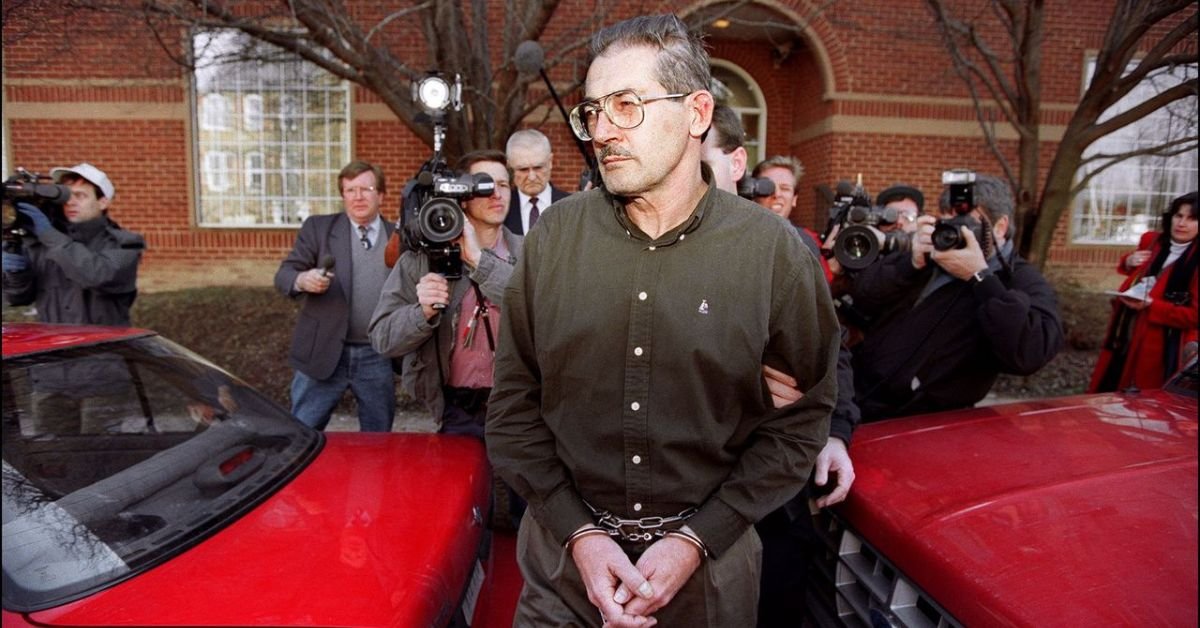
Arrested February 21, 1994, with Rosario.
The FBI caught him on camera in Caracas, Venezuela, lying about a “family trip.”
Aldrich Ames: Trial And Sentencing
Ames pleaded guilty on April 28, 1994, to espionage, admitting his full scope of damage in exchange for leniency for Rosario (63 months served).
He received life without parole.
The case prompted CIA reforms, including the implementation of financial audits and increased collaboration with the FBI.
Director James Woolsey called Ames a “warped, murdering traitor” worse than Benedict Arnold, but faced backlash for not firing him; he resigned under pressure.
Congress reinstated the death penalty for espionage (Ames ineligible due to the Rosenberg precedent).
Legacy And Current Status

Ames’ betrayal exposed CIA vulnerabilities and inspired books like Circle of Treason and films.
Reforms included mandatory financial disclosures, stricter polygraph tests, and inter-agency mole hunts, which eroded the “fraternity” culture and undermined public trust.
As of December 2025, at the age of 84, he is serving his sentence at the medium-security Federal Correctional Institution (FCI) in Cumberland, Maryland (previously located in Terre Haute, Indiana), not in a supermax facility, as his non-violent crimes do not warrant it.
No parole, no remorse; in interviews, he expressed pride in his CIA career but regret for the “good people” who died.
Ames’s story is not just espionage thriller fodder; it is a cautionary tale of how personal failings can unravel national security.
The ten lives lost were patriots who risked everything; Ames risked nothing but his soul for shopping sprees.
In an era of evolving threats, his legacy underscores that the most significant dangers often lurk within.
As Grimes dedicated her book to the victim Dmitri Polyakov: Their sacrifices demand eternal vigilance.
About The Author