
Table Of Contents
Welcome to THOUSIF Inc. – USA, where we provide insightful analysis on global events to help you stay informed.
Today, we are examining the recent escalation in the Middle East following President Donald J. Trump‘s announcement of U.S. military action against Iran.
This development has captured worldwide attention, raising questions about security, diplomacy, and economic stability.
We will cover the key facts, background, and potential implications in an accessible way, drawing on the most current information available.
The Announcement: A Direct Address From The President
On the morning of February 28, 2026, President Trump released an eight-minute video on his social media platform, confirming that the United States had initiated “major combat operations” in Iran.
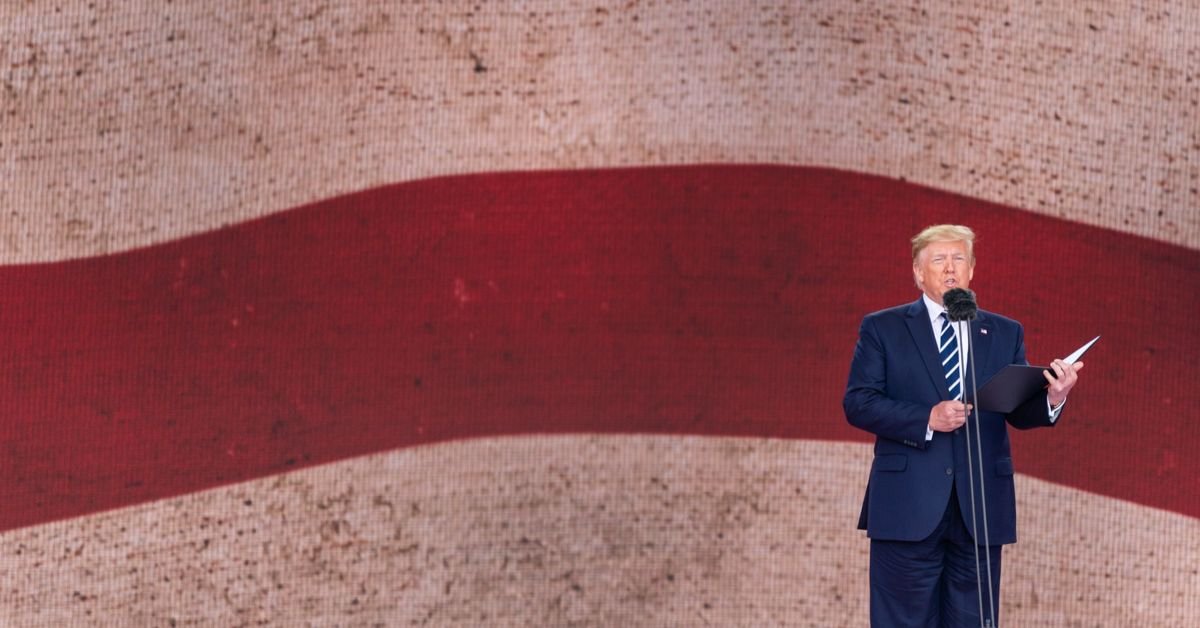
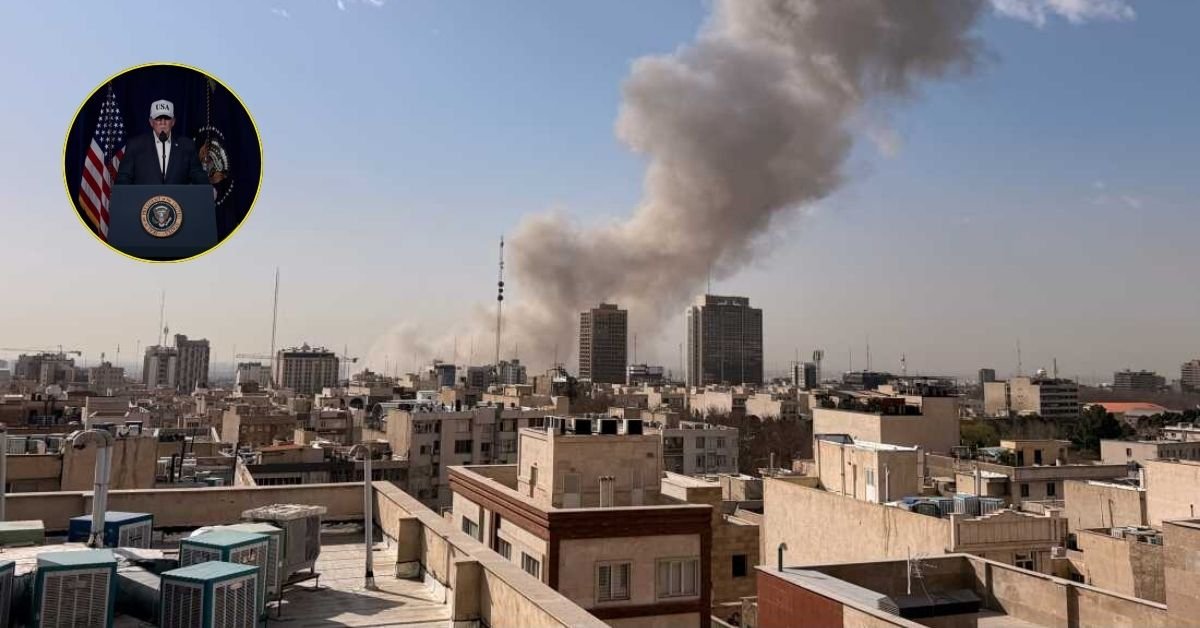
Speaking from a formal setting with American flags in the background and wearing a “USA” cap, Trump described the action as essential for defending American interests against what he called an “imminent threat” from Iran’s regime.
In his statement, Trump highlighted Iran’s alleged pursuit of nuclear weapons and ballistic missiles capable of reaching the U.S. He noted close coordination with Israel, which had launched preemptive strikes earlier that day.
Trump also addressed the Iranian people directly, urging them to rise and seize control of their government once the operations conclude, emphasizing that this could be their “only chance for generations.”
This marks a significant step in U.S. foreign policy under Trump’s second term, building on previous tensions and actions.
Background: How We Got Here
The roots of this conflict trace back to longstanding issues over Iran’s nuclear program.
In 2025, the U.S. and Israel conducted a 12-day campaign targeting Iranian nuclear sites after reports of rebuilding efforts following earlier disruptions.
Despite that, Iran continued enriching uranium to levels close to weapons-grade, according to international monitors.
Tensions peaked in early 2026 with massive protests in Iran against the regime, resulting in thousands of deaths during crackdowns. Trump cited over 30,000 fatalities in his address.
The U.S. increased its military footprint in the region, deploying aircraft carriers and additional forces to allies like Saudi Arabia and Kuwait.
Recent nuclear talks in Geneva, held just days before the strikes, collapsed.
The U.S. demanded the complete dismantlement of key facilities like Fordow and Natanz, along with the export of enriched uranium.
Iran sought relief from sanctions and the right to limited enrichment for peaceful purposes.
Trump’s warnings of consequences if no agreement was reached culminated in this military response.
Current Developments: Strikes And Retaliation
As of the latest reports on February 28, 2026, the joint U.S.-Israel operation, dubbed “Operation Epic Fury,” has targeted Iranian nuclear facilities, ballistic missile sites, naval assets, and security forces.
Explosions have been reported in major cities including Tehran, Isfahan, Qom, Karaj, and Kermanshah.
Smoke plumes and air-raid sirens have become a stark reality for residents, with videos capturing the immediate aftermath.
Iran has not remained passive.
The Islamic Revolutionary Guard Corps launched retaliatory missiles and drones at Israeli targets and U.S. military bases in Bahrain, Qatar, and the United Arab Emirates.
Debris from intercepted missiles has caused civilian injuries in the UAE, and alarms have sounded at key U.S. installations like Al Udeid Air Base.
Iranian state media reports successful hits on regional facilities, though details remain unverified.
Interestingly, amid the chaos, some Iranian students and protesters have been seen cheering the strikes, with videos circulating of chants like “I love Trump.”
This reflects deep internal divisions, as many view the action as an opportunity to challenge the regime’s authority.
The Human And Economic Impacts
At the heart of this conflict are the people affected.
In Iran, civilians are enduring fear and disruption, with reports of panic in urban areas.
While some segments of the population support the strikes as a catalyst for change, others rally behind the government, viewing it as foreign aggression.
Trump acknowledged the possibility of American casualties, underscoring the risks to U.S. troops stationed in the region.
Economically, the strikes have immediate ripple effects.
Oil prices surged by up to 15% in early trading, driven by concerns over the Strait of Hormuz, a vital chokepoint for global oil supplies.
If Iran follows through on threats to block the Strait of Hormuz, prices could climb even higher, potentially exceeding $100 per barrel.
This would translate to increased fuel costs worldwide, impacting everything from transportation to consumer goods.
Stock markets have dipped, and Gulf economies are on high alert due to their reliance on stable energy flows.
Potential Outcomes: From Escalation To Resolution
Experts are divided on what lies ahead.
The operation could expand if Iran’s proxies, such as Hezbollah or militias in Iraq, intensify attacks on U.S. interests.
There is also the risk of cyberattacks or disruptions to global shipping.
However, the U.S. strategy appears focused on degrading Iran’s military capabilities without a full-scale invasion, aiming for regime change through internal pressure.
For comparison, here is a table outlining differences between this event and the 2025 strikes:
| Aspect | 2025 12-Day Campaign | 2026 Operation Epic Fury |
|---|---|---|
| Triggers | Nuclear site reconstructions | Failed negotiations, protests |
| Primary Targets | Nuclear facilities | Missiles, navy, nuclear, security forces |
| Duration | 12 days | Ongoing, potentially days or weeks |
| Retaliation | Limited missile launches | Widespread missiles/drones on US/Israel bases |
| U.S. Objectives | Halt nuclear advancement | Full disarmament, regime change |
| Reported Casualties | Primarily military | Potential civilian and U.S. losses |
This table illustrates the heightened scope of the current actions.
Congressional critics, including some Republicans like Rep.
Thomas Massie has raised concerns that the strikes are unauthorized by Congress, labeling them as “acts of war.”
However, presidents have historically conducted airstrikes without full legislative approval.
International Reactions: A Divided World
The global response is mixed.
Israel, under Prime Minister Netanyahu, has fully endorsed the joint effort, calling it necessary for regional security.
Allies like the UK have expressed caution, stating they were not involved and urging de-escalation to avoid a broader conflict.
Adversaries such as China and Russia have condemned the strikes as aggressive and destabilizing.
The United Nations is convening emergency sessions, with calls for ceasefires and renewed diplomacy.
Even within the U.S., bipartisan support exists; some Democrats, like Senator John Fetterman, have backed the move as a step toward lasting peace.
Trivia
Here is an intriguing fact: While U.S.-Iran relations have been strained since the 1979 Islamic Revolution, Iran was once a key U.S. ally. In the 1960s and 1970s, under the Shah, Iran hosted U.S. military bases and even purchased advanced American weaponry. This alliance flipped dramatically, highlighting how geopolitical shifts can alter longstanding partnerships.
Conclusion
President Trump’s decision to launch military operations against Iran represents a pivotal moment in international relations, with far-reaching consequences for security and the global economy.
As events unfold, it is crucial to monitor developments closely while hoping for a resolution that minimizes loss of life.
At THOUSIF Inc. – USA, we are committed to delivering clear, reliable insights on such topics.
We invite you to share your perspectives in the comments and explore our other articles on global affairs, including our in-depth look at Middle East diplomacy.
Thank you for reading.
Stay informed and engaged.
About The Author